List of Contract Manufacturing Companies in India: A Practical Guide for Growing Brands

India has become an important destination for businesses seeking flexible and scalable manufacturing solutions. Companies across pharmaceuticals, cosmetics, food, nutraceuticals, chemicals, and consumer products increasingly use contract manufacturing to produce goods without establishing their own manufacturing facilities. A list of contract manufacturing companies in India can therefore be a useful starting point for businesses searching for suitable production partners.
Contract manufacturing allows a brand owner to outsource selected manufacturing activities to a specialized company. Depending on the industry and agreement, the manufacturer may manage production, formulation, processing, quality testing, packaging, labeling, and other related services.
Understanding Contract Manufacturing in India
Contract manufacturing is a business arrangement in which one company manufactures products on behalf of another company. The client usually provides product specifications, quality requirements, packaging preferences, and expected quantities. The manufacturing partner then produces the goods according to the agreed terms.
This model can help businesses enter new product categories without investing heavily in factories, machinery, production staff, and operational infrastructure.
Major Types of Contract Manufacturers
When reviewing a list of contract manufacturing companies in India, businesses should first identify the industry and type of manufacturing service they require.
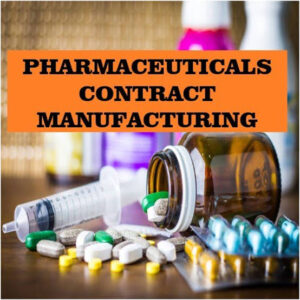
Pharmaceutical contract manufacturers produce products such as tablets, capsules, syrups, creams, ointments, powders, injections, and other dosage forms, subject to applicable requirements.
Cosmetic manufacturers support brands with skincare, haircare, personal-care, and beauty products. Services may include formulation, filling, packaging, and private-label production.
Nutraceutical manufacturers can manufacture products such as nutritional supplements and wellness formulations according to applicable standards and product specifications.
Other contract manufacturing segments include food processing, chemicals, electronics, automotive components, industrial products, and consumer goods.
Benefits of Working With Contract Manufacturers
One of the biggest advantages of contract manufacturing is reduced infrastructure requirements. Building an independent manufacturing facility requires investment in land, machinery, utilities, employees, maintenance, quality systems, and other operational resources.
Outsourcing production allows businesses to use existing manufacturing infrastructure. This can enable companies to focus more closely on marketing, distribution, customer relationships, product development, and business expansion.
Contract manufacturing can also provide production flexibility. Depending on the manufacturer’s available capacity and commercial terms, companies can discuss batch sizes and production schedules based on their requirements.
Quality and Compliance Considerations
Quality management should be a central consideration when evaluating contract manufacturing companies. Businesses should review a potential partner’s manufacturing facilities, quality-control systems, testing capabilities, documentation procedures, and relevant certifications.
For pharmaceutical and other regulated industries, companies should verify that the manufacturer’s licenses and certifications are appropriate for the products being manufactured. Requirements can vary according to product category, dosage form, intended market, and applicable regulations.
A clear quality agreement can also define responsibilities for testing, raw materials, production processes, packaging, documentation, and finished-product specifications.
Private Label Manufacturing Services
Many contract manufacturing companies in India also provide private-label solutions. Under this model, a business can market products under its own brand while an external manufacturer handles production.
Private-label services may include customized packaging, labels, product sizes, formulations, and other specifications where technically feasible and legally permitted. Before production starts, both parties should clearly define branding requirements, intellectual property, quality standards, minimum order quantities, and delivery schedules.
How to Evaluate a Contract Manufacturing Company
A company should not select a manufacturer based only on price. When researching a list of contract manufacturing companies in India, businesses can compare factors such as manufacturing experience, infrastructure, production capacity, quality systems, technical expertise, packaging capabilities, minimum order quantities, lead times, and communication.
It is also helpful to request relevant company and facility documentation before entering into a commercial relationship. Businesses should ensure that the manufacturer’s capabilities match their specific product requirements.
Building a Long-Term Manufacturing Partnership
A successful contract manufacturing relationship depends on clear communication and well-defined responsibilities. Product specifications, order quantities, testing procedures, packaging requirements, pricing, delivery schedules, and documentation should be agreed upon before production begins.
Regular communication can help businesses coordinate inventory, respond to changing demand, and address production requirements efficiently.
Conclusion
A list of contract manufacturing companies in India can help businesses begin their search for suitable production partners across pharmaceutical, cosmetic, nutraceutical, food, chemical, and consumer-product industries. However, choosing the right company requires more than reviewing names. Manufacturing capabilities, quality systems, regulatory compliance, production capacity, customization options, and commercial terms should all be evaluated carefully. With proper research and a clearly structured agreement, contract manufacturing can provide businesses with a flexible approach to production and market expansion.
