
network VAPT affect business operations
Organizations depend on stable and secure networks to support daily operations, customer interactions, communication, and data management. As cyber threats continue to grow in sophistication, businesses increasingly invest in proactive security measures to identify weaknesses before attackers exploit them. One of the most effective methods is network vulnerability assessment & penetration testing, which evaluates the security posture of an organization’s network by identifying vulnerabilities and validating potential attack paths. Despite its many benefits, a common concern among business leaders is whether the assessment process itself could disrupt normal business operations. Understanding how these assessments are planned and executed helps organizations appreciate that, when conducted properly, they are designed to improve security while minimizing operational impact.
The primary objective of network vulnerability assessment & penetration testing is to identify security weaknesses in a controlled and authorized manner. Unlike malicious cyberattacks, professional assessments follow carefully defined procedures, approved testing scopes, and agreed-upon rules of engagement. Security specialists work closely with organizational stakeholders to ensure that testing activities are performed responsibly and with minimal disruption. Careful planning significantly reduces the likelihood of unexpected interruptions while allowing businesses to continue their routine operations.
Before testing begins, security professionals spend considerable time defining the assessment scope. They identify which systems, network segments, cloud resources, servers, firewalls, and endpoints will be evaluated. During this planning stage, organizations can specify critical systems that require special handling or identify periods when testing should be avoided due to important business activities. This collaborative preparation ensures that network vulnerability assessment & penetration testing aligns with operational requirements while still providing comprehensive security coverage.
Vulnerability assessment activities generally have very little impact on business operations. These assessments primarily involve identifying software versions, checking system configurations, reviewing security settings, and comparing discovered information against known vulnerability databases. Modern vulnerability scanning tools are designed to operate efficiently without significantly affecting system performance. Although scanning generates network traffic, experienced security professionals carefully configure scanning intensity to avoid placing excessive load on production systems.
Penetration testing involves more active validation of identified vulnerabilities, which naturally requires additional caution. Ethical hackers simulate real-world attack techniques to determine whether vulnerabilities can actually be exploited. However, these activities are performed in a controlled environment with authorization from the organization. During network vulnerability assessment & penetration testing, testers avoid actions that could intentionally damage systems, delete data, or interrupt critical business services. The goal is to demonstrate risk safely rather than cause operational disruption.
Scheduling plays an important role in minimizing business impact. Many organizations choose to conduct more intensive testing during evenings, weekends, maintenance windows, or other periods of lower network activity. By performing potentially disruptive activities outside peak business hours, security teams reduce the possibility of affecting employees, customers, or business transactions. Flexible scheduling allows organizations to balance comprehensive security assessments with uninterrupted daily operations.
Communication between security professionals and organizational stakeholders further reduces operational risks. Throughout the assessment, testers maintain regular contact with IT administrators, network engineers, and business representatives. If unexpected system behavior occurs, testing can be paused immediately while administrators investigate the situation. This collaborative approach ensures that network vulnerability assessment & penetration testing remains transparent, controlled, and responsive to operational concerns throughout the engagement.
Certain high-risk testing techniques may require additional precautions. For example, testing legacy systems, industrial control systems, medical devices, or highly sensitive production environments often demands specialized methodologies. In these situations, security professionals may use passive analysis, carefully limited testing, or dedicated staging environments instead of performing aggressive exploitation directly against production assets. These adjustments help maintain operational stability while still providing valuable security insights.
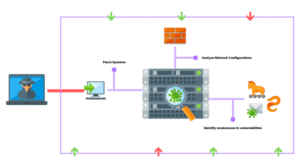
Does network VAPT affect business operations?
Cloud-connected networks also require thoughtful planning during assessments. Organizations often rely on cloud infrastructure to support business-critical applications and services. Security professionals understand the shared responsibility model associated with cloud platforms and perform testing within approved guidelines established by cloud service providers. Properly executed network vulnerability assessment & penetration testing evaluates customer-managed resources without violating provider policies or affecting the availability of cloud services.
Testing can occasionally reveal underlying infrastructure weaknesses that were previously unknown. For instance, an outdated server, overloaded network device, or unstable application may respond poorly even to routine security scans. While this could temporarily affect a specific system, the assessment itself does not create the weakness—it simply exposes an existing reliability issue. Discovering such problems allows organizations to improve both security and operational resilience before malicious actors encounter the same vulnerabilities.
Comprehensive risk assessments performed before testing help identify systems requiring special protection. Critical financial platforms, healthcare systems, manufacturing equipment, and customer-facing applications may receive customized testing strategies based on their operational importance. Security teams document these considerations during planning so that network vulnerability assessment & penetration testing delivers meaningful results without compromising essential business functions.
Organizations also benefit from maintaining reliable system backups before assessments begin. Although professional testing rarely causes operational issues, having verified backups and recovery procedures provides additional assurance that business continuity can be maintained if unexpected technical problems occur. This precaution represents standard operational best practice rather than a specific response to security testing activities.
The long-term operational benefits of regular security assessments often outweigh the minimal short-term impact associated with testing. Identifying vulnerabilities before cybercriminals exploit them helps prevent ransomware attacks, data breaches, prolonged service outages, financial losses, and reputational damage. In many cases, organizations experience greater operational disruption from successful cyberattacks than from carefully planned network vulnerability assessment & penetration testing engagements. Proactive security investments therefore support both cybersecurity and overall business continuity.
Another advantage is improved collaboration among IT, security, compliance, and executive teams. Assessment findings encourage organizations to strengthen patch management, improve network segmentation, enhance access controls, update security policies, and modernize outdated infrastructure. These improvements reduce future operational risks while increasing organizational resilience against evolving cyber threats.
Experienced security providers also perform post-assessment reviews to ensure that all testing activities have concluded successfully and that no unintended configuration changes remain. Detailed reporting explains every action taken during the assessment, documents identified vulnerabilities, and provides clear remediation guidance. This transparency helps organizations fully understand both the testing process and the resulting security improvements.
Ultimately, network vulnerability assessment & penetration testing is designed to strengthen business operations rather than disrupt them. Through careful planning, defined testing scopes, controlled methodologies, ongoing communication, and experienced execution, organizations can safely evaluate their network security while maintaining operational continuity. Although minor performance impacts may occasionally occur during specific testing activities, these are typically temporary and well managed. The valuable insights gained from professional security assessments enable organizations to reduce cyber risk, improve infrastructure resilience, support regulatory compliance, and ensure that critical business operations remain protected against increasingly sophisticated cyber threats.
